

The new Greek table: five restaurants worth crossing for.
A generation of Greek chefs has come back from Geranium, Frantzén and Mugaritz to cook a quieter, more rooted grammar than the tavern culture the country is known for. An Editorial Desk reading of five rooms, four of them with Michelin stars, that are setting the modern Greek table.
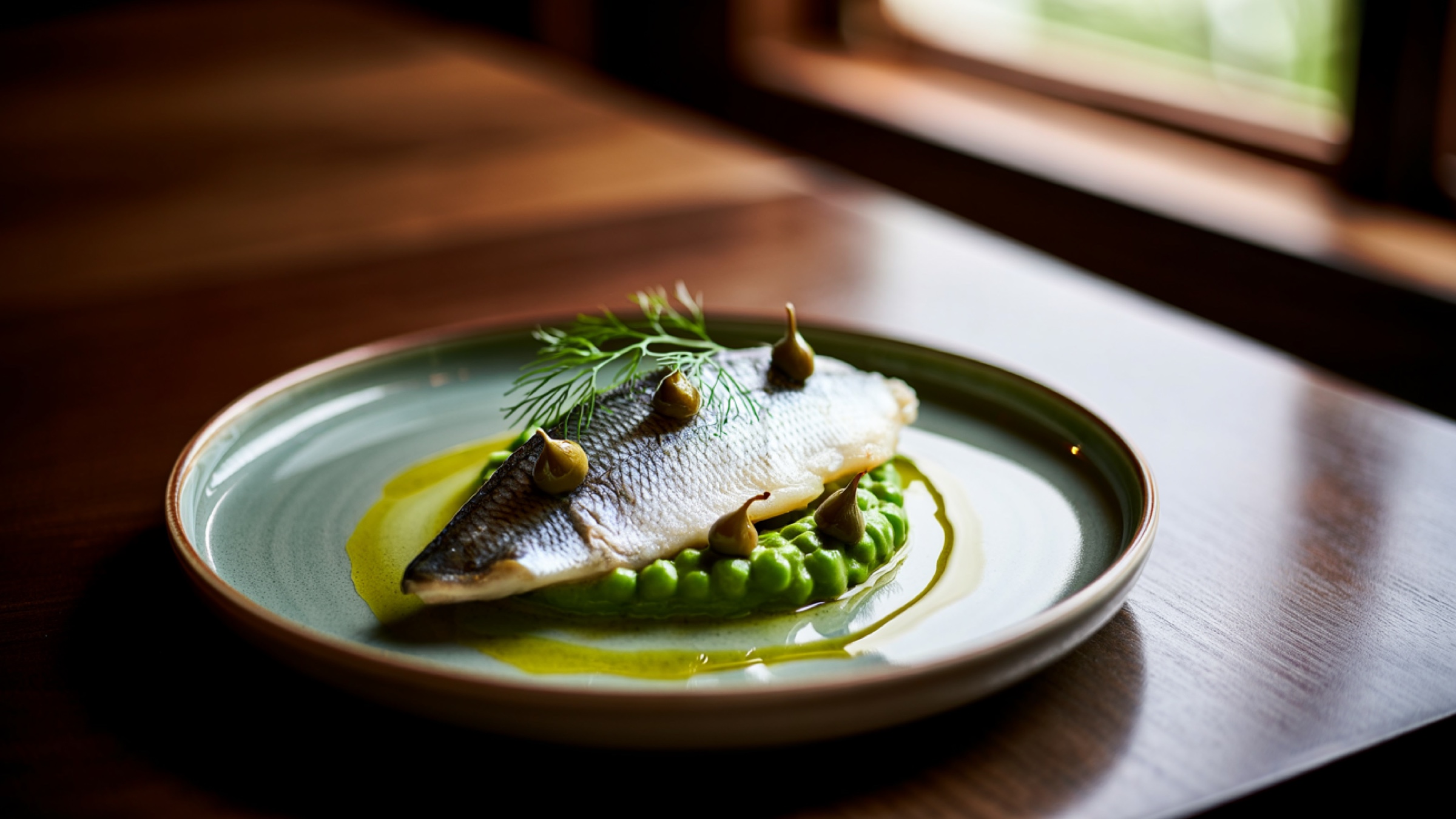
In brief.
- The grammar. A modern Greek high-end cooking rooted in local product and built largely by chefs who trained in the best northern-European and Iberian kitchens between 2010 and 2020, then came home.
- The five. Delta and Soil in Athens, CTC in Kerameikos, Botrini's in Chalandri, and Selene on Santorini. Four hold Michelin stars; Delta holds two, the only two-star in Greece.
- The standing. Delta and Soil carry Greece's only two Green Stars for sustainability, and Greek tasting menus still price below their London, Paris or Copenhagen equivalents.
The Signal
Greek high-end dining has split, over the past decade, into two lines. The first is the tavern-into-fine-dining tradition that still carries most of the country's food identity abroad. The second is quieter, smaller and more disciplined, built by a generation of Greek chefs who trained in the best kitchens of northern Europe and Spain between 2010 and 2020 and then came home. The clearest proof is in the names of the kitchens they trained in: Geranium in Copenhagen, Frantzén in Stockholm, Mugaritz and Asador Etxebarri in the Basque Country. Five rooms set the line the rest of the modern Greek table is following.
The five
By what they are, not by ranking. Delta, inside the Stavros Niarchos Foundation Cultural Centre in Athens, is the summit: the only two-Michelin-star restaurant in Greece, cooking a single sustainability-led tasting menu under head chef Thanos Feskos, who came back from Geranium in Copenhagen, with George Papazacharias directing. It also holds a Michelin Green Star, one of only two in the country.
Soil, in a neoclassical house in Pangrati, holds the other Green Star, alongside a Michelin star. Its chef, Tasos Mantis, trained at Hof van Cleve, Geranium, Frantzén and The Fat Duck, made his name at Hytra, and now cooks a long tasting menu built largely from his own garden at Alepochori. It is the purest expression of the returned-chef thesis on this list.
CTC, in Kerameikos, is the modern-Greek standard-bearer of the younger generation. Alexandros Tsiotinis, who worked at Le Bristol, Arpège and Astrance in Paris before opening at home, holds a Michelin star for a surprise tasting menu that reworks Greek produce without ceremony. Botrini's, in a converted school in Chalandri, is the durable one, a Michelin star held for around a decade by Ettore Botrini, whose Greco-Italian cooking draws on Corfu, Thessaly and Tuscany in equal measure.
The fifth is the island entry. Selene, in an eighteenth-century monastery building in Fira on Santorini, has been the island's landmark modern-Cycladic table since 1985, and is now run by Ettore Botrini. It carries no Michelin star, because Santorini only enters the Greek guide in 2026, but its reputation is long and it sits on the World's 50 Best Discovery list. It is the room that carries the wider-Greece beat the Athens four cannot.
The Implication
What ties the five together is a refusal of the presentation-led grammar of the early 2010s. The plates carry fewer components, the rooms carry fewer covers, and the cooking answers to a specific place rather than to an international style. Greece now has a two-star at the top, a widening band of one-stars beneath it, and two Green Stars for kitchens that treat sustainability as method rather than marketing. And it is still, for now, under-priced: a tasting menu at any of these tables costs well below its equivalent in London, Paris or Copenhagen.
That gap is the story to watch. The 2026 Michelin Guide Greece, the first to cover Santorini and Thessaloniki, is expected in the second half of the year, and it will almost certainly widen the recognised field. As it does, the pricing will move toward the international line. The rooms are small and the tables are hard to get. For a reader who pays attention, the signal is already clear.
Frequently asked
What is the new Greek table?
Modern Greek cooking rooted in local product, built largely by chefs who trained in the best northern-European and Iberian kitchens between 2010 and 2020 — Geranium, Frantzén, Mugaritz, Asador Etxebarri — and then returned to Greece. It is less performative than the early-2010s wave and more anchored to season and place.
Which restaurants make the five?
Delta (two Michelin stars, inside the SNFCC in Athens), Soil (one star plus a Green Star, in Pangrati), CTC (one star, in Kerameikos), Botrini's (one star, in Chalandri), and Selene on Santorini. Four hold Michelin stars; Selene is the island's landmark table, listed on World's 50 Best Discovery.
Where does Greek fine dining sit internationally?
Greece has one two-star restaurant (Delta) and a growing group of one-stars, and its tasting menus still price below comparable London, Paris or Copenhagen tables. The 2026 Michelin Guide Greece, the first to cover Santorini and Thessaloniki, is expected in the second half of 2026.
Early Insider access
The week, read against the long present of Greece.
The Editorial Desk sends one email each Sunday morning, Athens time, with no noise and no churn, written for the professionals and operators who pay attention to Greece because they live, build, or invest in it. Early Insider access is opening in limited spots and closes soon.